I still remember the first time my rescue tabby, Momo, launched herself across my tiny one-bedroom in Toa Payoh like a furry missile. She cleared the coffee table, ricocheted off the sofa, and landed on the windowsill with this wild look in her eyes. I was laughing and panicking at the same time—because in a Singapore HDB flat, that kind of energy can end with a very expensive vet bill or a very angry neighbour. That moment hit me: small space doesn’t have to mean small life for your cat. It just means you have to get creative.
Living in Asia’s concrete jungles—whether it’s a compact HDB in Singapore, a high-rise in Hong Kong, or a shoebox apartment in Tokyo—comes with its own rhythm. We’re surrounded by humidity that sticks to everything, limited floor space, and the constant hum of the city. Cats feel that confinement too. They’re wired to hunt, climb, stalk, and explode into sudden bursts of speed. Lock all that inside four walls and you risk the zoomies turning destructive, or worse, your cat turning into a bored, overweight shadow who stares at you like you’ve personally betrayed their ancestors.
I’ve been there. Momo used to wake me at 3 a.m. with that classic “I’m dying of boredom” yowl. She’d scratch the cheap IKEA curtains and ignore her fancy (but boring) bed. It took some trial, a lot of error, and way too many crinkled paper balls before I figured out what actually worked in our limited square footage. Here’s what I’ve learned—the stuff that actually sticks when you’re juggling work, humidity, and a feline who thinks the entire flat is her personal racetrack.
Why Your Apartment Cat Needs More Than Just Food and a Litter Box
Cats aren’t lazy by nature; they’re energy-efficient predators. In the wild (or even in a kampung back in the day), they’d spend hours patrolling, pouncing, and patrolling again. In our air-conditioned boxes, that instinct doesn’t vanish—it just festers into midnight sprints, sudden attacks on your ankles, or stress behaviours like over-grooming.
I’ve seen it in friends’ cats too. One buddy in a Bishan condo had a beautiful Maine Coon mix who started peeing outside the litter box. Turned out the poor guy was just climbing the walls—literally and figuratively—because there was nowhere to climb. Another friend’s Bengal in a Hong Kong flat developed this obsessive tail-chasing thing until they installed a couple of wall shelves. The difference was night and day.
The truth is, mental and physical stimulation keeps them balanced. A tired cat is a happy cat, and honestly, a quieter one at 2 a.m. when you’re trying to sleep before the next morning rush on the MRT.
Vertical Is Your Best Friend (And the Landlord Might Never Notice)
If there’s one hack that changed everything for us, it’s going up instead of out. Floor space in Asian apartments is sacred—every centimetre counts for your drying rack, your tiny dining table, or that one sad houseplant fighting for survival. But walls? Walls are usually fair game.
I started small. A couple of sturdy floating shelves from the neighbourhood hardware store, mounted at different heights. Momo ignored them for two days, then suddenly claimed the highest one as her throne. From there she could survey the entire living room like a tiny empress. Add a narrow ramp or even a sturdy cardboard box stacked cleverly, and you’ve created a highway in the sky.
Cat trees are great if you have the budget and the corner for one, but they can dominate a small room. I’ve seen clever DIY versions using second-hand bookshelves or even repurposed wooden crates from those wet market deliveries. Just make sure it’s stable—nothing worse than hearing a crash at midnight and finding your cat looking betrayed under a pile of planks.
In Singapore especially, with our love for neatness, these vertical additions double as decor if you pick neutral tones. My neighbour has a whole wall of staggered perches that look almost intentional, like modern art for cats. Her Persian mix spends hours up there, tail flicking, watching the mynah birds outside.
Pro tip: Always check your lease or property rules, but most places are fine with wall-mounted stuff as long as you don’t drill like you’re renovating for a family of ten. And secure everything. High-rise syndrome is real here—cats leaping after a bird or a butterfly and forgetting they’re on the 18th floor. Window mesh or sturdy screens aren’t optional if your cat is the adventurous type.
Playtime That Actually Wears Them Out
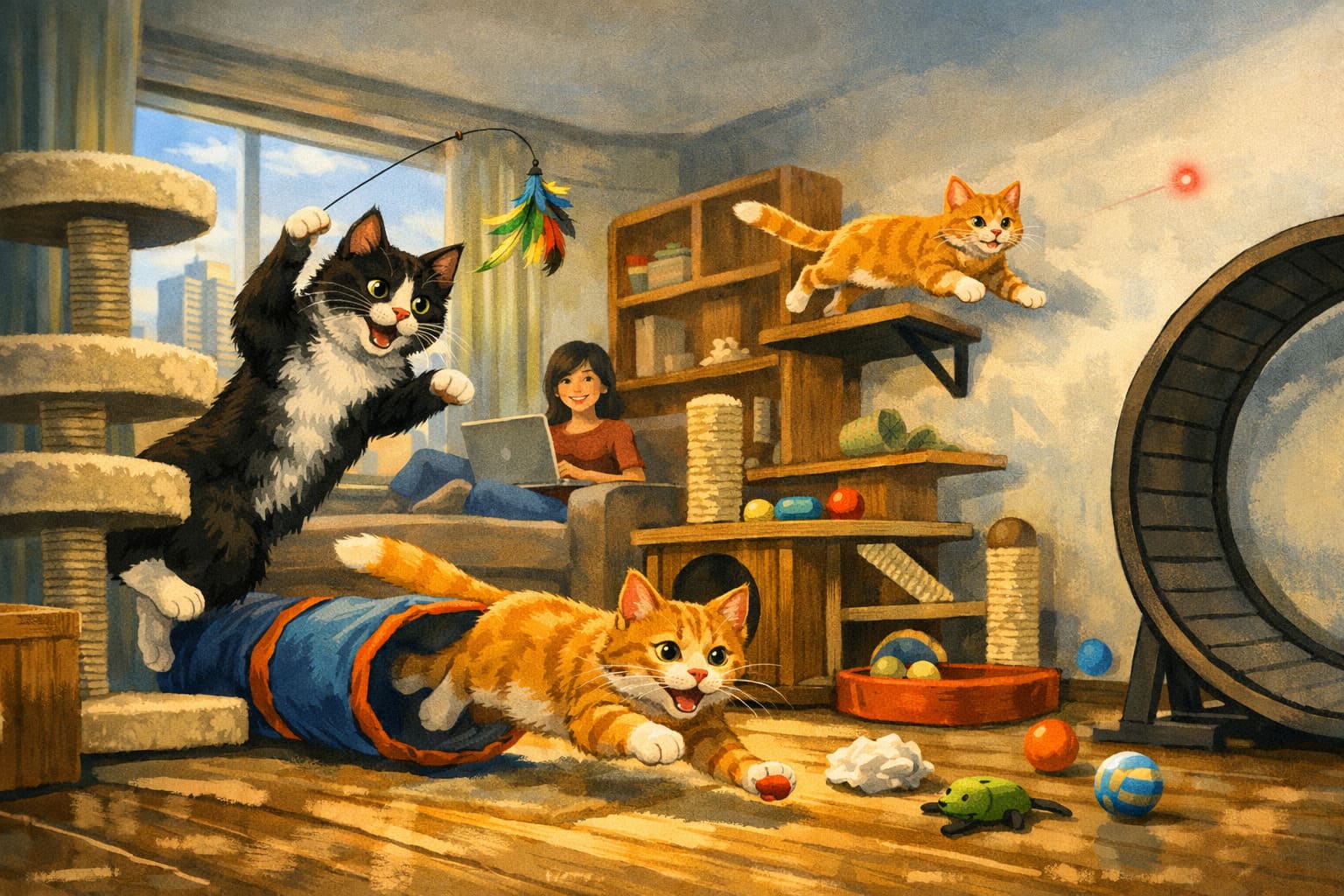
Fifteen to twenty minutes of focused play can do wonders. I know, I know—after a long day of meetings or commuting in the heat, the last thing you want is to wave a feather wand like a mad conductor. But trust me, it’s worth it.
Momo goes absolutely feral for a cheap telescopic wand with a feather or ribbon tail. I drag it under the sofa, make it “hide” behind furniture, then let it dart across the floor. The key is variety and rhythm—let her stalk, pounce, miss a few times (builds frustration in a good way), then let her catch it so she feels like a champion hunter. End the session with a treat or a small meal so her brain registers “hunt → reward → rest.”
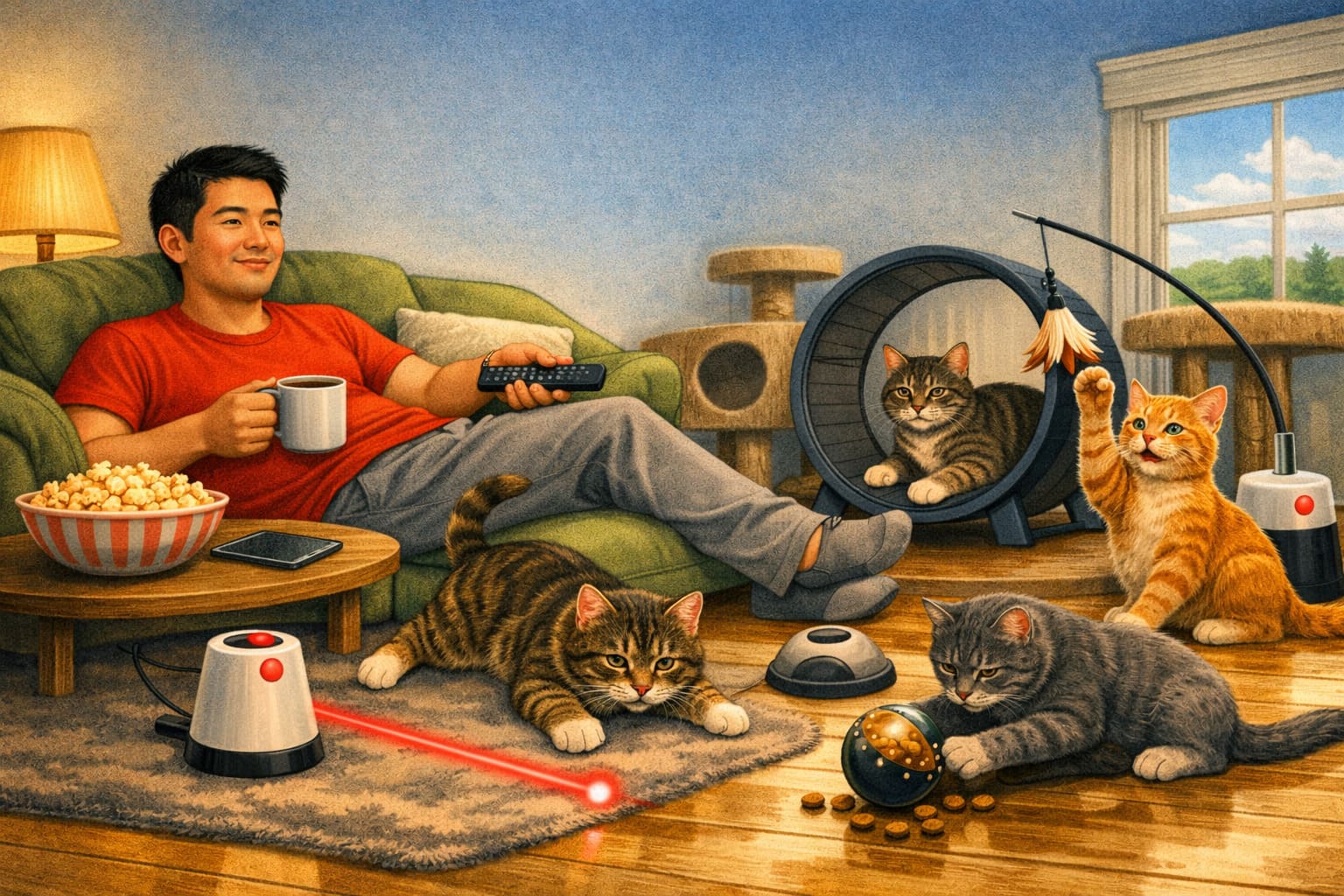
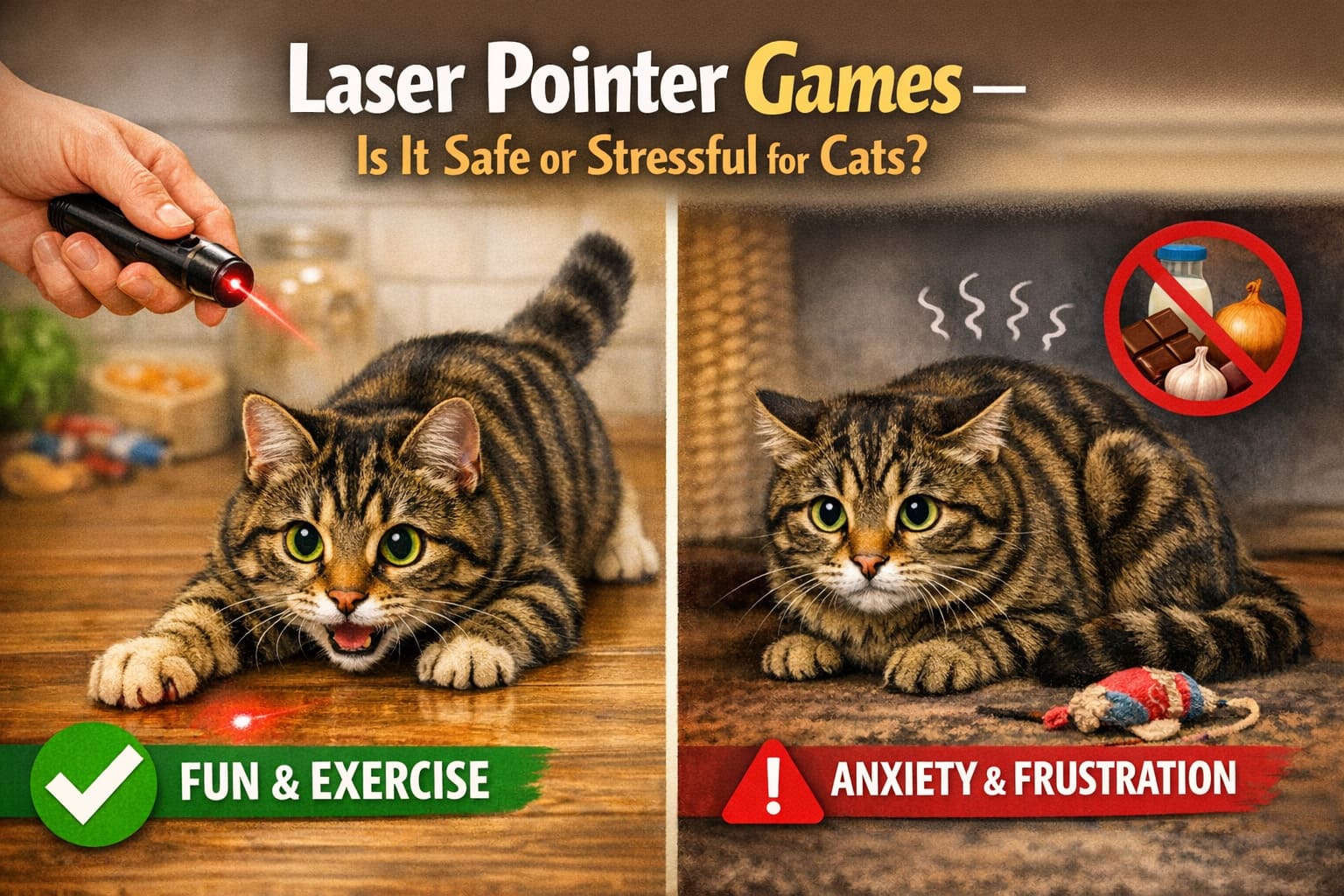
Laser pointers? Controversial. They’re fun for a quick burst, but some cats get frustrated because they never actually catch anything. I use it sparingly, always ending with a real toy she can bite.
Other favourites in our flat: crumpled aluminium foil balls (the crinkle drives her mad), a ping-pong ball in the bathtub (endless echoey chaos), and those cheap mouse toys from the pet section in Mustafa Centre. Rotate them. Cats get bored of the same old thing faster than we do with our Netflix shows.
If you’re in a rush, puzzle feeders turn mealtime into exercise. Scatter kibble around the room, stuff some into empty toilet paper rolls, or use an egg carton with treats in the dips. Momo will spend ten minutes batting and fishing them out, which is ten minutes she’s not plotting world domination.
The Magic of Boxes, Bags, and Random Household Junk
Never underestimate cardboard. I once bought an expensive tunnel toy that Momo sniffed once and ignored. Meanwhile, the box it came in became her favourite ambush spot for weeks. Cut a few holes, tape a couple together into a maze, and you’ve got free entertainment.
Paper bags (handles removed for safety) become instant caves. Old socks stuffed with catnip or dried silver vine—another favourite in Asia—make kick toys. Even a simple crinkle ball from packing paper can spark a midnight Olympics.
In humid climates like ours, these things get a bit gross after a while, so I rotate and toss when they look sad. Cheap, replaceable, and zero guilt.
Window Watching and the Great Outdoors (Safely)
One of the simplest enrichments is giving them a view. Set up a sturdy perch by the window—maybe an old stool or a dedicated window hammock if your sill allows. Momo can spend hours tracking the movements outside: the auntie walking her dog, the changing light on the opposite block, the occasional gecko on the glass.
If you have a balcony, even better. Some people turn theirs into a mini catio with netting and safe plants. Just be mindful of the afternoon sun and rain—our weather doesn’t play nice.
For the truly adventurous (and patient) cat parent, harness training opens up another world. I tried it with Momo on quiet evenings in the corridor or a nearby park when it wasn’t too crowded. She was suspicious at first, but once she realised she could sniff new smells and feel grass under her paws, she started strutting like she owned the estate. Start slow, use lots of treats, and never force it. Not every cat will love it, and that’s okay.
Food as Entertainment, Not Just Fuel
Rotating proteins and textures keeps things interesting, but the real game-changer is making them work for it. Instead of dumping food in a bowl, hide small portions around the flat during the day. Or use those treat-dispensing balls that roll and click.
I’ve caught myself hiding pieces of freeze-dried chicken like some kind of deranged Easter bunny parent. But watching her hunt with that focused little butt-wiggle? Worth every second of feeling ridiculous.
The Human Element—You’re Part of the Enrichment
No toy replaces you. Cats are social in their own prickly way. Even five minutes of gentle grooming, a chin scratch session, or just sitting on the floor while they zoom around you makes a difference. I’ve had nights where I’m exhausted but I lie on the mat and let Momo “attack” my moving fingers under a blanket. She crashes harder after those sessions.
Some cats love clicker training—teaching them to high-five or jump through a hoop. It’s surprisingly fun and gives their brain a workout. I’m no expert, but the look of pride when she nails a new trick is addictive.
What I Wish I’d Known Sooner
Not every day will be perfect. Some days Momo still has the 3 a.m. crazies, or I come home to a knocked-over plant because I forgot to rotate the toys. That’s life with a cat in a small space. The goal isn’t perfection; it’s progress. A cat who’s mostly content, mostly active, and only occasionally plotting your demise.
I’ve also learned that different cats need different things. My friend’s lazy British Shorthair thrives on food puzzles and window time, while Momo needs more chase-and-pounce action. Observe yours. They’ll tell you what lights them up—if you pay attention.
In the end, giving your apartment cat big energy isn’t about turning your home into a pet store jungle gym. It’s about understanding that even in these stacked concrete boxes we call home, a little imagination can let their wild side breathe.
Sometimes I watch Momo perched on her shelf at dusk, tail curled neatly, eyes half-closed but ears twitching at every sound. She looks… satisfied. Like she’s decided this tiny kingdom is enough, as long as it keeps offering surprises.
And honestly? That feeling—that quiet “we’re doing okay here”—is worth every crinkled ball, every late-night zoomie cleanup, and every suspicious side-eye from the aunties downstairs when they see the harness.
Your cat doesn’t need a massive garden or a forest to roam. They just need you to remember they’re still a hunter at heart, even if their hunting grounds are now measured in square metres and creative compromises.
Keep the energy flowing. The zoomie cat will thank you. And so will your curtains.