I’ve spent a lot of time standing in the pet food aisle. It’s overwhelming. You’ve got bags of kibble that claim to clean teeth and cans of pate that look like something from a fancy restaurant. Everyone has an opinion. Your vet says one thing, your neighbor says another, and the internet is full of people arguing about it.
It’s easy to feel like you’re doing something wrong. If you give them dry food, are you dehydrating them? If you give them wet food, are you rotting their teeth? It’s a lot to think about.
But here’s the thing. There isn’t one “perfect” answer that fits every single cat. It usually comes down to your cat’s specific health, your budget, and how much time you have. Let’s look at how it actually works so you can stop stressing about the cereal aisle for cats.
The Case for Dry Food
Most of us start with dry food. It’s easy. You can buy a big bag, dump it in a bowl, and it stays good all day. If you work long hours, dry food is a lifesaver because your cat can snack whenever they want.
It’s better for your wallet
Let’s be real. Cat food is expensive. Dry food is almost always cheaper than wet food when you look at the price per meal. You’re not paying for the water weight or the individual tin cans. If you’re feeding three or four cats, that price difference adds up fast.
It’s easy to store
You don’t need to clear out a spot in your fridge for half-used cans. You just clip the bag shut and put it in a cupboard. It doesn’t smell up your kitchen, and you don’t have to wash crusty bowls every five minutes.
But here’s the problem with dry food
Dry food is, well, dry. It usually only has about 10% water. In the wild, cats get most of their water from the animals they catch. They don’t have a strong “thirst drive.” They aren’t like dogs who will lap up half a bowl of water after a walk. A cat might be slightly dehydrated and not even realize they need to drink more.
Also, dry food needs something to hold those little nuggets together. That “something” is usually carbs. Corn, wheat, or potatoes. Cats don’t actually need many carbs. They’re meat eaters. Too many carbs can lead to some cats putting on way too much weight.
The Case for Wet Food
If you ask a lot of nutritionists, they’ll tell you wet food is the way to go. Here’s why.
It’s basically meat soup
Wet food is usually around 70% to 80% water. This is a huge deal. Since cats aren’t great at drinking water on their own, eating wet food is like “eating” their hydration. It keeps their kidneys happy and helps flush out their system. If your cat has ever had a urinary tract infection or crystals, your vet probably told you to switch to wet food immediately.
More protein, fewer fillers
Because wet food doesn’t need to be shaped into a crunchy bit, it usually has more animal protein and fewer starches. For an animal that evolved to eat birds and mice, this is much closer to what their body expects.
It’s better for picky eaters
Most cats think wet food tastes better. It smells stronger and has a texture they like. If you have an older cat who is losing weight or a cat that just won’t eat their kibble, a can of wet food usually solves the problem.
But here’s the downside
It’s messy. It smells. If your cat doesn’t eat it all within 20 minutes, it gets a weird crust on top and you have to throw it away. Plus, it costs significantly more. If you’re buying high-quality cans, you might end up spending more on your cat’s dinner than your own.
The Big Myth: Dry Food and Teeth
You’ve probably heard that dry food is better for a cat’s teeth because the “crunch” scrapes off plaque.
I’ll be honest: for most cats, this isn’t really true. Think about it. If you ate a bunch of crackers, would that be the same as brushing your teeth? Not really. Most cats actually swallow their kibble whole, or the bits shatter so easily that there’s no real scraping happening.
Unless you are buying a specific “dental diet” kibble that is designed to stay together until the tooth sinks into it, the dental benefits are pretty small. The best way to keep a cat’s teeth clean is still a toothbrush, as much as they might hate it.
Why Hydration Matters So Much
I mentioned this earlier, but it’s worth talking about more. Cats are desert animals by nature. Their ancestors didn’t have big lakes to drink from, so they got moisture from their prey.
When a cat lives on dry food alone, they are often in a state of mild dehydration. This can lead to big problems later in life. Kidney disease is one of the most common ways cats get sick as they get older. Keeping their kidneys flushed with plenty of water is one of the best things you can do to help them live longer.
If your cat absolutely refuses to eat wet food, you have to be a bit of a detective to get them to drink. A lot of cats hate still water in a bowl. They might prefer a fountain because they like moving water. Or they might hate it if their water bowl is right next to their food. In the wild, “food” (dead animals) near water often meant the water was contaminated, so they still have that instinct to keep them separate.
The Carb Problem and Obesity
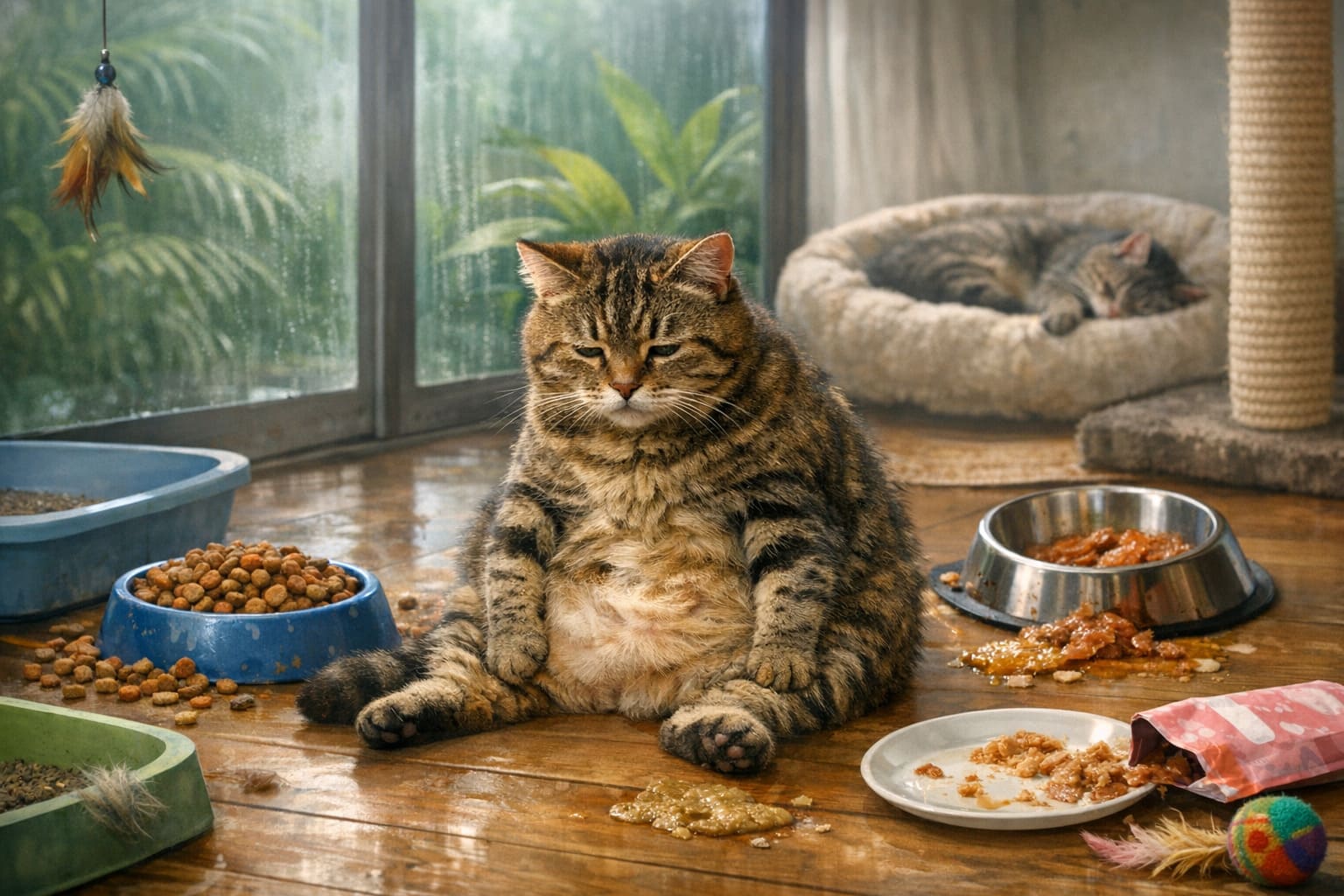
If you have a “chonky” cat, the dry food might be the reason. Because dry food is so calorie-dense, it’s very easy to overfeed them. A small handful of kibble might have as many calories as a whole can of wet food.
Also, since dry food is left out all day (what people call “free feeding”), cats often eat out of boredom. They walk by the bowl, take a few bites, and move on. Over a few years, those extra bites turn into a cat that can’t groom itself properly because it’s too round.
Wet food is harder to overeat because it has so much water in it. It fills the cat up faster. It’s like the difference between eating a bag of potato chips and eating a big bowl of soup. One is way easier to overdo.
Can You Do Both?
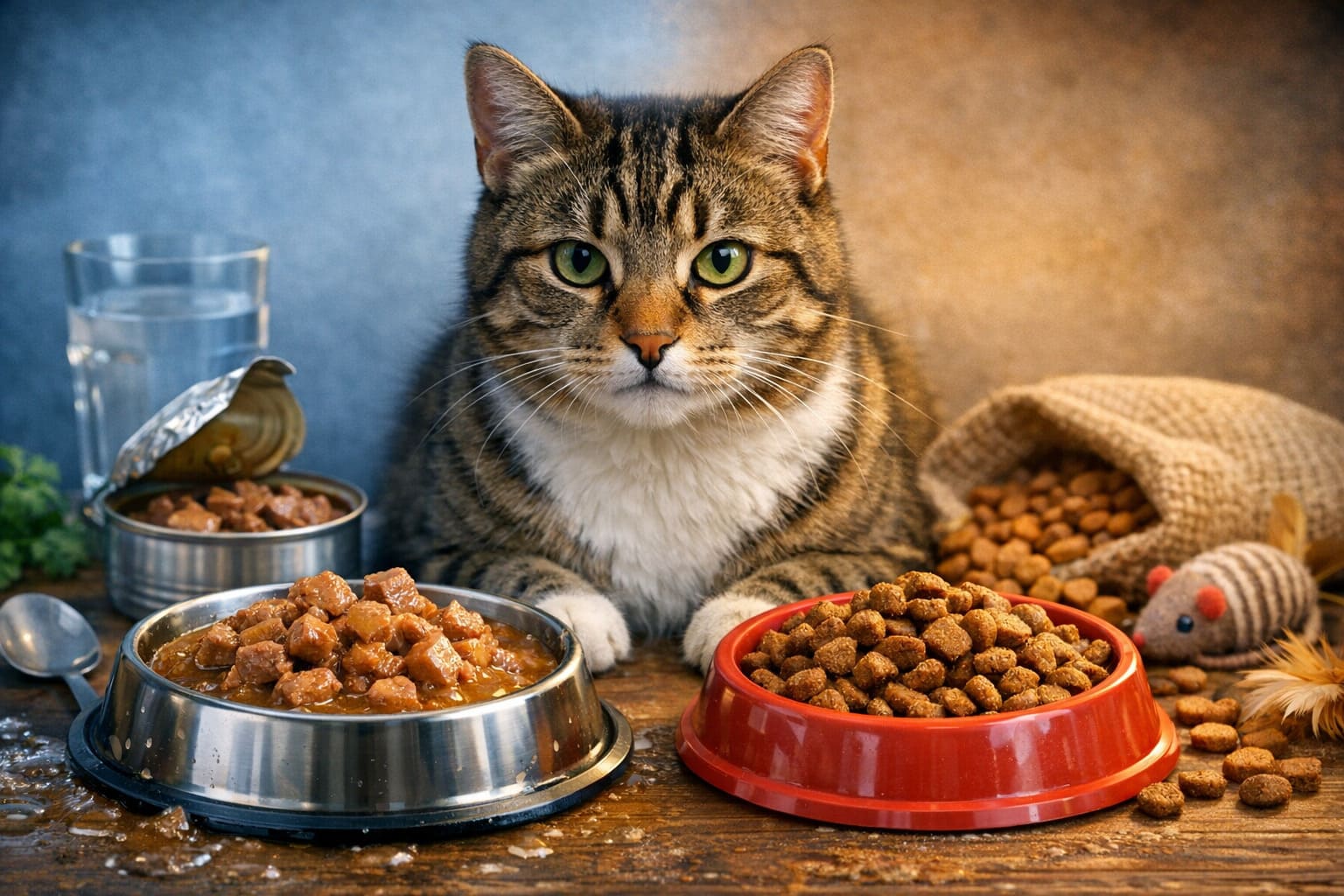
Most people I know find a middle ground. This is what I do. I give my cat a small serving of wet food in the morning and at night. Then, I leave a measured amount of dry food out for them to snack on during the day.
This gives you the best of both worlds. Your cat gets the extra hydration and protein from the wet food, but you get the convenience and lower cost of the dry food.
If you do this, just make sure you aren’t feeding them too much in total. You have to subtract the calories of the wet food from the amount of dry food you give them.
Specific Cases Where One is Better
Sometimes, the choice is made for you.
- Kittens: They need a ton of calories and protein to grow. A mix is usually best so they get used to different textures early on.
- Senior Cats: Older cats often have bad teeth or kidney issues. Wet food is almost always better for them. It’s easier to chew and easier on the organs.
- Diabetes: If a cat is diabetic, doctors usually put them on a strictly wet, low-carb diet. It helps manage their blood sugar way better than kibble can.
- Urinary Issues: If your cat has ever struggled to pee, stop the dry food. They need as much water as possible to keep their bladder clear.
How to Choose
So, what should you actually buy?
First, look at your cat. Are they a good weight? Do they drink a lot of water? Do they have any health issues? If your cat is healthy, has plenty of energy, and drinks from their bowl, dry food is fine.
Second, look at your life. If you can’t be home at 5 PM to open a can, don’t feel guilty about using dry food. You can always add a little water or unsalted chicken broth to the kibble to boost the moisture.
Third, read the label. Whether it’s wet or dry, the first ingredient should be a specific meat (like chicken, turkey, or fish). If the first ingredient is “corn gluten meal” or “meat by-products,” maybe look for something else.
Here’s the Bottom Line
There is no “evil” choice here. People get very heated about cat food, but at the end of the day, a fed cat is better than a hungry one.
If you can afford to give some wet food, do it. The hydration is worth it. But if you need to stick to dry food for your budget or your schedule, your cat will likely be just fine—just make sure they have plenty of fresh water available and try not to let them get too fat.
Every cat is a little different. Some cats will walk away from the most expensive wet food in the world and cry until you give them the cheap crunchy stuff. That’s just how they are. Pay attention to how your cat looks and acts. If their coat is shiny, their weight is good, and they seem happy, you’re probably doing a great job.